What the Data Center Boom Means for Contractors Who Will Never Build One
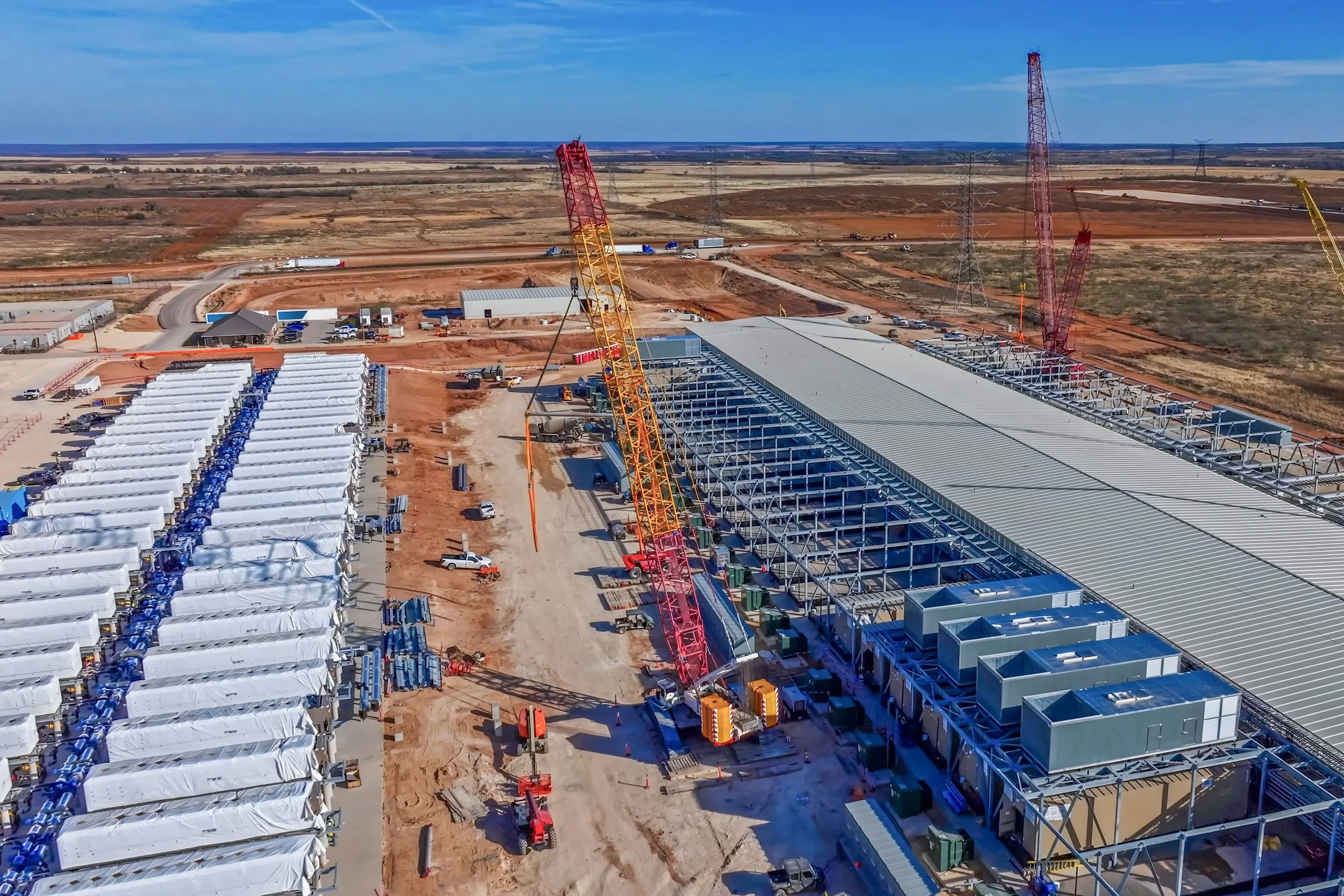
The data center construction boom is reshaping commercial construction, but not just for the commercial contractors building them.
For most contractors, the question “How do we win a billion-dollar AI campus?” is unrealistic. Instead, the question that matters right now is “What does this wave of construction mean for the kinds of projects we do pursue, and how can we use the lessons coming out of it to become faster, more profitable, and more valuable to our clients?”
According to Zack Fritz and Anirban Basu at Sage Economics, using ABC Construction Backlog Indicator data, the 12% of contractors with data center work reported an average backlog of 11.4 months. The 88% without data center work reported 7.5 months.
That gap is real. But it does not mean every commercial construction company needs to chase data centers.
It means contractors should pay attention to what the data center boom is accelerating: offsite construction, smarter preconstruction, better supply-chain coordination, AI-enabled document review, repeatable systems, and a greater focus on speed-to-revenue. Those innovations will not stay inside the data center world forever. They are already creating new expectations for manufacturing facilities, distribution centers, warehouses, mission-critical renovations, and other complex commercial projects.
The Data Center Boom Is Raising the Bar for Everyone
Hyperscalers (companies that runs computing infrastructure at an enormous, global scale) have an unusually urgent problem: they need computing capacity now, not three years from now. Regardless of how you feel about data center construction, that urgency is forcing owners, designers, manufacturers, and contractors to rethink traditional construction processes. In a recent Wall Street Journal article, industry leaders described building practices and products designed to save hours, weeks, and even months from data center schedules.
For commercial builders outside the data center market, the takeaway is not that every project needs robotic drilling equipment or custom fiber-optic connectors. The takeaway is that schedule compression is becoming a competitive advantage.
Owners in manufacturing, logistics, and industrial markets are asking the same fundamental question hyperscalers are asking: “How quickly can this facility be operational and generating revenue?”
A manufacturer expanding production capacity, a distributor opening a regional fulfillment center, or a developer delivering a speculative warehouse all have enormous financial incentives to shorten the time between groundbreaking and occupancy. Commercial construction companies that learn to reduce friction—in estimating, procurement, approvals, coordination, fabrication, and closeout—will be better positioned to win that work.
Innovations Likely to Trickle Into Manufacturing, Warehouses, and Distribution Centers
Not every data center innovation is transferable. But several are highly relevant to the projects many commercial builders already construct.
1. Offsite and Modular Construction Will Become More Practical
Data center builders are increasingly using offsite-built electrical and mechanical rooms that can be fabricated in a controlled environment, transported to the site, and installed as major assemblies. That approach can save months on a data center schedule.
In more conventional commercial construction, the same thinking can improve delivery on projects with repeatable mechanical, electrical, plumbing, and process components.
Consider the possibilities:
· Prefabricated restroom pods for warehouses and manufacturing facilities
· Skid-mounted mechanical systems
· Preassembled electrical rooms and switchgear enclosures
· Multitrade corridor racks
· Prebuilt process utility assemblies
· Standardized wall panels or exterior envelope components
The opportunity is not simply “do more prefab.” The opportunity is to identify the portions of your projects that are repetitive, schedule-sensitive, labor-intensive, or difficult to coordinate in the field, and determine whether they can be designed, procured, and assembled differently.
2. Procurement Will Move Earlier in the Process
Long-lead equipment has been a challenge across commercial construction for years. Data center construction is amplifying the issue because electrical infrastructure, cooling equipment, generators, and other specialized systems can dictate the entire schedule.
That reality is familiar to commercial builders working on manufacturing, distribution, and warehouse projects. The firms that outperform will be the ones that bring procurement intelligence into preconstruction, not after the project is awarded.
That means asking better questions early:
· What materials or equipment could threaten the schedule?
· What alternates should be priced before the owner is under pressure?
· Which subcontractors and suppliers need to be engaged during design?
· Where can standardization reduce procurement risk?
· What owner decisions must be made sooner to protect the critical path?
This is where builders can shift from being a bidder to being a strategic advisor. Owners do not just need a price. They need a partner who can see risk before it becomes delay.
3. AI Will Reduce Administrative Drag
One of the most practical lessons from the data center boom is that AI is beginning to remove low-value, time-consuming work from the construction process.
The Wall Street Journal highlighted the use of AI tools to review contracts and vendor submittals against project specifications. Saving five hours on one review may not sound transformative. But multiply that across a busy preconstruction and project management team, and the impact becomes meaningful.
For commercial construction companies, AI can help teams:
· Review and summarize bid documents
· Identify scope gaps and inconsistencies
· Organize client and subcontractor information
· Draft meeting recaps and follow-up communications
· Create first drafts of project-specific marketing content
· Analyze pipeline data and identify business development priorities
· Surface trends in win rates, backlog, gross profit, and client activity
The goal is not to replace experienced estimators, project executives, or business developers. The goal is to give them more time to do the work only they can do: build relationships, solve problems, make decisions, and create value for clients.
4. Repeatability Will Beat Reinvention
Data centers are forcing construction teams to standardize what can be standardized. When an owner needs multiple facilities quickly, every unnecessary design variation, handoff, and field adjustment becomes expensive.
Even when projects are not identical, contractors can create repeatable systems around how they estimate, qualify opportunities, conduct preconstruction, engage subcontractors, communicate with clients, and transition projects from pursuit to operations.
The companies that grow profitably are rarely reinventing their business development process every Monday morning. They have a disciplined approach to identifying ideal opportunities, nurturing the right relationships, tracking activity, and measuring results.
The Backlog Question: Is 7.5 Months Enough?
For some firms, 7.5 months of backlog may feel comfortable. For others, it may be a warning sign.
The important question is not simply how many months of work are under contract. It is whether your future pipeline contains the right kind of work in various stages of the pipeline:
· Projects that fit your team’s capabilities
· Clients who value collaboration and certainty
· Work with realistic schedules and healthy margins
· Opportunities that can become repeat business
· Projects where you have a real relationship advantage—not just a low-bid position
• Opportunities that are spread out across your pipeline so they can be properly manned and managed
If your backlog is at 7.5 months or less, now is the time to act—not when your teams are scrambling for work.
Reactive business development creates reactive pricing. And reactive pricing often leads to thin margins, difficult clients, and projects your team never wanted to build in the first place.
Build a Better Pipeline Before You Need It
At Petra, we believe commercial construction companies need to move beyond sporadic networking, proposal chasing, and hoping the next RFP is a good fit.
The Contacts to Contracts Framework™ is designed to help construction companies create a more intentional, relationship-driven path to negotiated work. Rather than waiting for opportunities to appear, contractors can identify their best-fit clients, consistently create valuable touchpoints, and build trust long before a project goes out to bid.
This strategy becomes much more effective when it is supported by the right systems.
The Petra construction marketing platform gives leadership and business development teams a clearer view of where growth will come from, with tools including:
· Pipeline Tracker to organize pursuits, monitor opportunity stages, and identify trends
· Gross Profit Projection to connect pipeline activity with revenue and margin goals
· Construction CRM to manage relationships, contacts, and client intelligence
· Pipeline Intelligence to identify early-stage project signals and get in front of leads 6-18 months before formal RFPs
· AI tools powered by Claude to accelerate research, writing, planning, and business development workflows
· Content Hub to turn expertise into consistent marketing that supports trust and visibility
· BD Messaging Hub templates, coaching, and conversation tracking to win on value, not price
· Reporting that helps CEOs, marketers, and BDs see what is working, what is stalled, and where to focus next
The Opportunity Is Bigger Than Data Centers
The data center boom may be creating longer backlogs for a select group of contractors. But every commercial builder can benefit from the operational and strategic lessons it is bringing to the market.
You may never build a hyperscale data center. That is okay.
But your clients will increasingly expect speed, predictability, procurement insight, technical coordination, and proactive communication. They will gravitate toward builders who can help them make better decisions earlier and deliver projects with fewer surprises.
The companies that win the next generation of manufacturing, warehouse, and distribution center work will not necessarily be the largest. They will be the most prepared.
If your backlog is looking like 7.5 months or less, do not wait for urgency to force your hand. Build a healthier pipeline now, focus on the relationships most likely to produce negotiated work, and give your team the systems to pursue profitable projects with confidence.
Petra helps commercial construction companies turn business development into a repeatable growth engine, not a last-minute scramble.