
Why Petra?
We named our platform after a city that thrived in the desert, because it built a system instead of waiting for rain.
Petra is named for the ancient city of Petra in Jordan, where the Nabataeans turned scarce desert water into a thriving trade capital by building a system to capture, direct, and store it. Commercial construction companies face the same challenge with their pipeline. Petra, the platform, is that system for marketing and business development.
A city that should never have worked
Two thousand years ago, the Nabataeans carved a city into the rose-red cliffs of southern Jordan. The desert around it saw very little rain. Nothing about the location said "major trade hub."
Yet at its peak, Petra supported tens of thousands of people. It had gardens, pools, and fountains in the middle of the desert.
The Nabataeans never found more water. They built a system for the water they had:
Channels and pipes. More than 30 miles of rock-cut channels and terracotta pipes carried spring water into the city.
Dams. They slowed and redirected the flash floods that would otherwise tear through the canyons and vanish.
Cisterns. Underground storage held every drop for the dry months ahead.
Other desert settlements hauled water by hand. They stayed small or disappeared. Petra built infrastructure and became one of the great cities of the ancient world.
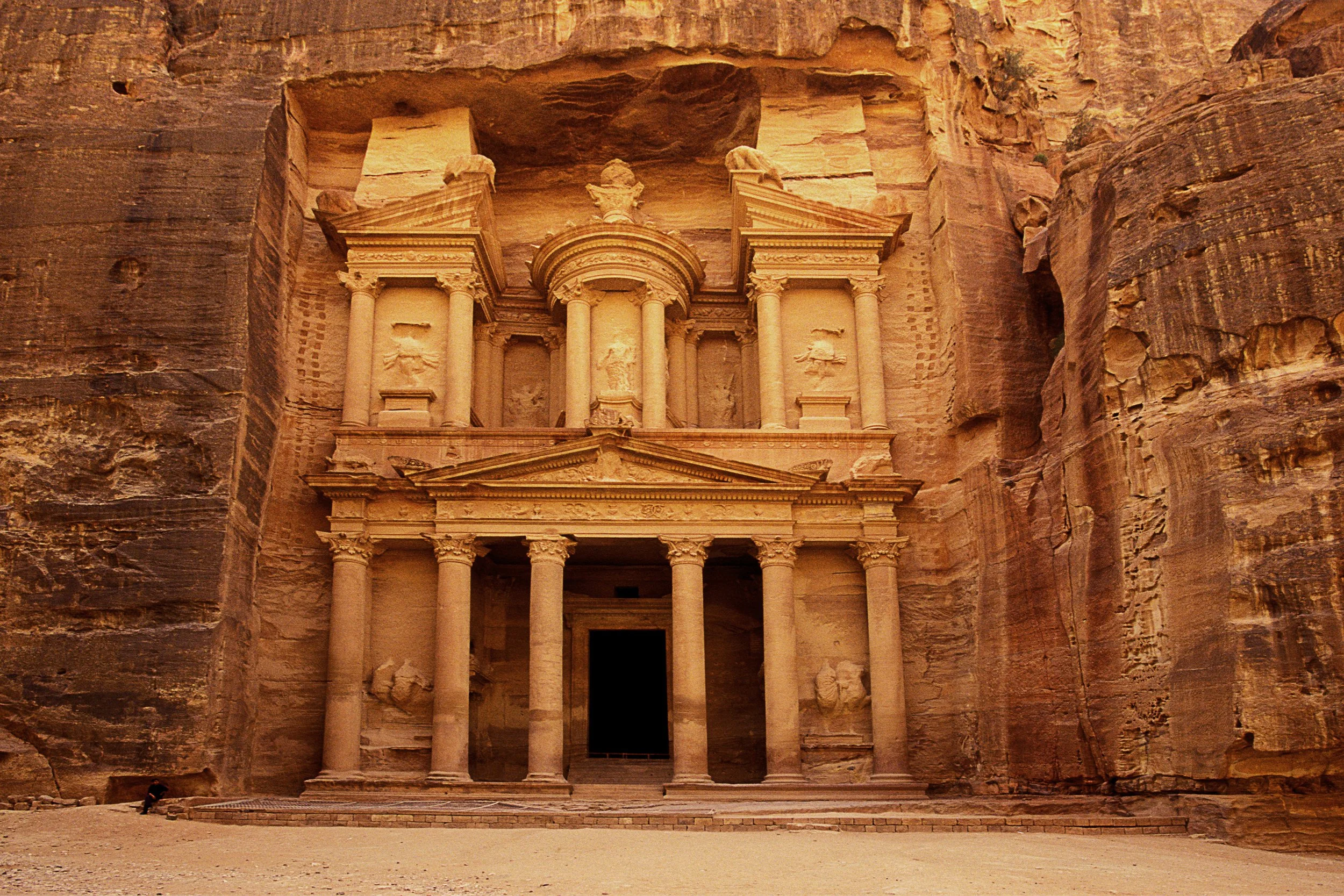
Petra didn’t have a water problem. It had a system problem, and it solved it.
Sound familiar?
Most commercial contractors treat marketing the way a desert town treats rain. When work is plentiful, nobody thinks about it. When the backlog starts to look thin, everybody does.
You know how it goes. A big project wraps up and nothing is lined up behind it. So the scramble starts: an email goes out to a list nobody has touched in a year, someone updates the website, the calls begin to owners you last spoke with two projects ago. A few months later the crews are busy again, and marketing goes back on the shelf until the next dry spell.
That is hauling buckets. It feels like effort, and it is. But a relationship you start when you need the work is already 6 to 18 months too late for the project in front of you.
The opportunities were there the whole time. So were the relationships and the talent. What was missing was a way to hold onto them:
The pipeline lives in one spreadsheet and the contacts in another.
Marketing runs out of a separate email tool, with no line to the work it wins.
The most valuable knowledge in the company sits in a few people's heads and phones.
Nobody records why a pursuit was lost, so the same loss repeats.
None of that is a people problem. Your people are good at what they do. They are carrying water in buckets, because nobody built the channels.
Marketing as infrastructure
The Nabataeans understood that a resource only matters if you can capture it, direct it, and store it for when you need it. We built Petra on the same idea: one system for marketing and business development, made for commercial construction.
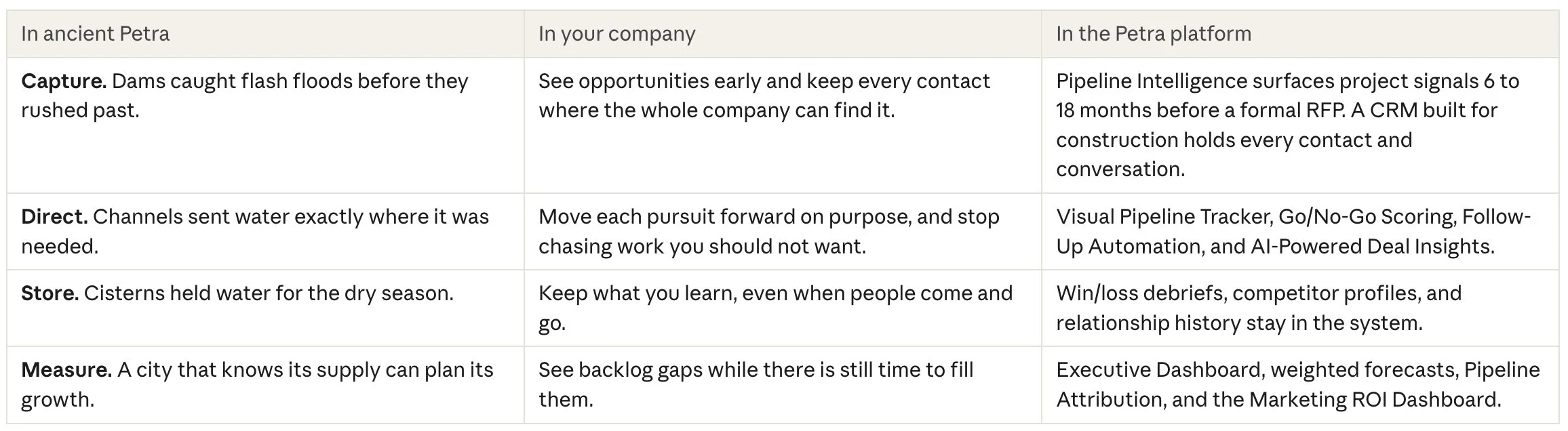
Email marketing, the content calendar, and a library of construction-specific templates live in the same place. Marketing keeps running when you are busy, which is exactly when it matters most.
What a system changes
Reliable water did more than keep Petra alive. It let the city grow, trade, and plan ahead instead of scrambling to survive. Contractors see the same shift when steady, connected marketing replaces the scramble.
No more dry-spell panic. Marketing and BD run every month, so the pipeline is filling while your crews are busy.
One version of the truth. Leadership, estimating, marketing, and BD work from the same data.
Forecasts you can act on. Weighted pipeline shows next year's gaps now.
Smarter pursuits. Go/No-Go decisions follow a standard, so you chase fewer jobs and win more profitable ones.
Marketing that proves its value. Campaigns tie to pipeline and signed contracts.
Growth beyond the founder. The business stops depending on what a few people carry in their heads.
Questions people ask about the name
Why is the platform called Petra?
Petra is named after the ancient city of Petra in Jordan. The Nabataeans made it thrive in the desert by building a system to capture, direct, and store scarce water. The platform does the same for a contractor's opportunities, relationships, and knowledge.
What does the city of Petra have to do with commercial construction?
Petra succeeded through infrastructure, which builders understand better than anyone. Most contractors already have enough opportunities. What they lack is a system that keeps leads, relationships, and lessons from draining away between projects.
Why do commercial contractors need a marketing system?
Construction relationships take 6 to 18 months to turn into work. Marketing that starts only when the backlog is thin arrives too late to fill it. A system keeps marketing and business development running in busy seasons, so the pipeline is full when the current jobs end.
Is Petra another tool to add to the stack?
No. Petra replaces the scattered spreadsheets, contact lists, and email tools with one platform for pipeline, CRM, marketing, and BD intelligence.
Who is Petra built for?
Petra is built for commercial construction companies: general contractors, construction managers, design-builders, and specialty contractors.
Stop hauling buckets.
Your company already has the opportunities, the relationships, and the talent. Build the system that captures them, directs them, and keeps them working for you.
Primary button: Start your free 7-day trial
Secondary link: Read the full story: Your System Is the Problem